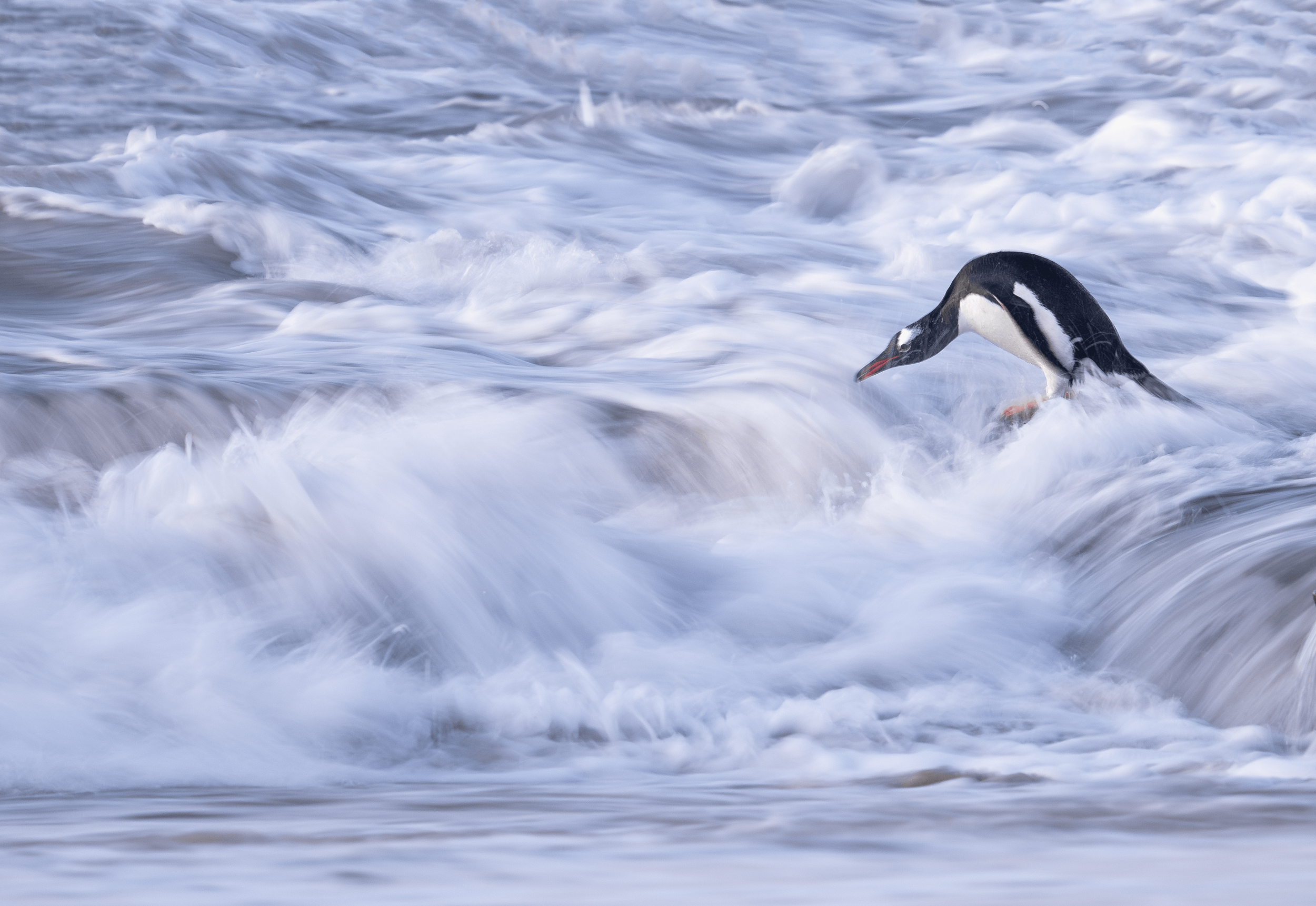
Cover Photo: Gentoo Penguin in Surf by Jacqueline Burke
Finding Meteorites in Antarctica
by Paul Brooke
Available on this page January 2027
Finding Meteorites in Antarctica
This poetry collection studies intimately the landscape, wildlife, and lost history of the Antarctic. With a naturalist’s eye, Brooke creates vignettes through an invented form (a zeitgeber) that drives the poems with rhythm, metaphor, and layered meaning. Finding Meteorites in Antarctica resonates and crackles with language meant for those who care about saving this ecosystem and celebrating this unique place.
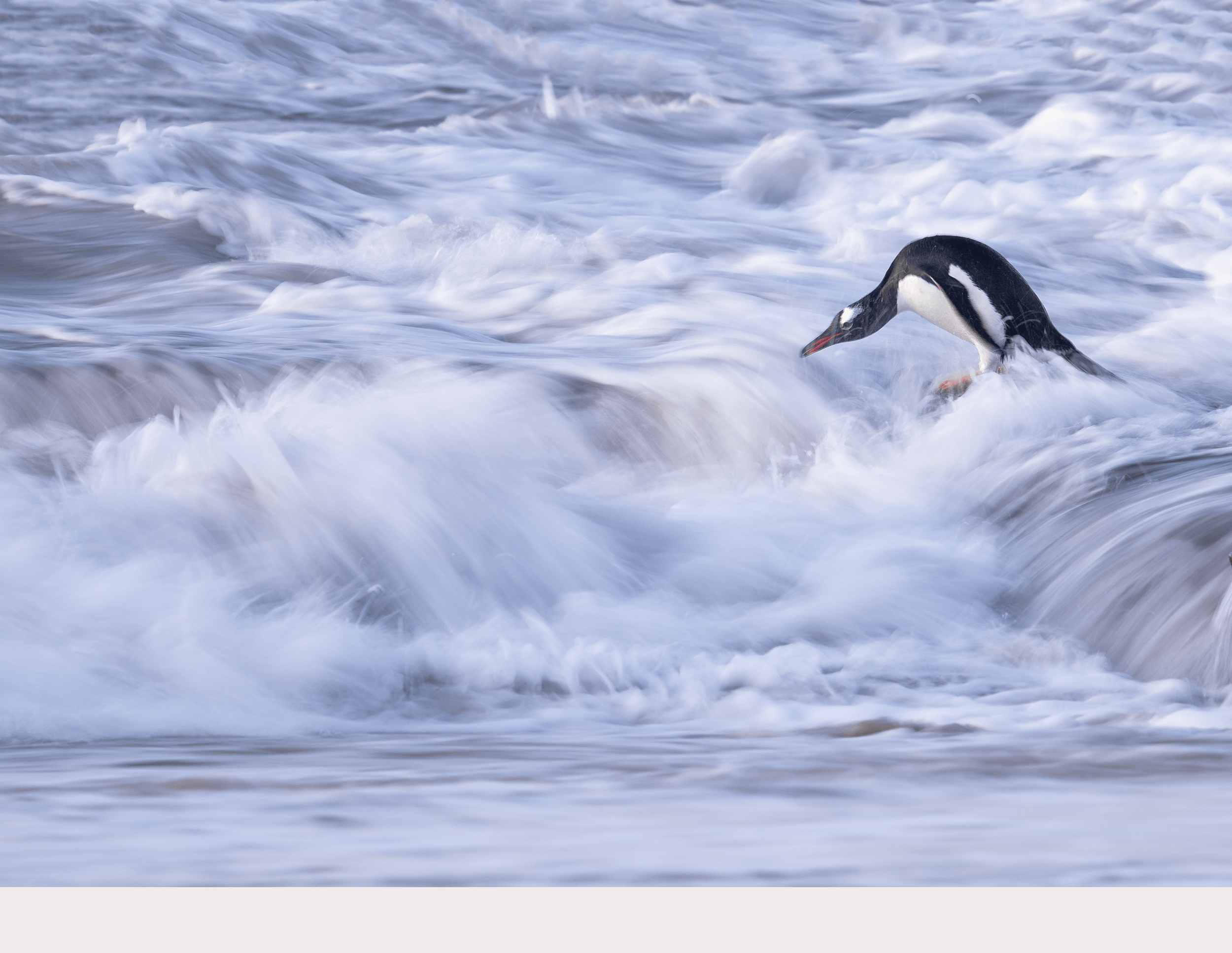
Gentoo Penguin in Surf by Jacqueline Burke
Advance praise for Finding Meteorites in Antarctica
This poetry collection studies intimately the landscape, wildlife, and lost history of the Antarctic. With a naturalist’s eye, Brooke creates vignettes through an invented form (a zeitgeber) that drives the poems with rhythm, metaphor, and layered meaning.
Antarctica’s landscape provides just enough to become more tempting than a simple blank canvas; it is textures and colors and curves encouraging us to look for patterns, systems and symmetries. Brooke’s po-ems embrace that human need for form and description, establishing his own novel framework to hold together and organize an understanding of this most inhuman continent. He admirably creates feeling and place, fully controlling any expository overburden.
—Dr. Ralph Harvey, Principle Investigator for U.S. Antarctic Search for Meteorites program, Professor of Earth, Environmental and Planetary Science at Case Western Reserve University
Paul Brooke’s latest collection is a tour de force of taut, luminous poems. He once again, plumbs the depths of our fathomless universe for what is lost and what it is still possible to save. Brooke has spent his life committed to bearing witness to this astonishing and bewildering world, so full of radiance and sorrow: We feel resonance echo through our bones, see beauty lost for which we must atone. He offers this clarion call to all who read to commit again to loving the earth and each other.
—Heather Derr-Smith, author of Outskirts
Finding Meteorites in Antarctica is a collection of remarkable breadth, ranging from scientific field notes to expedition chronicle to lyric elegy — and yet never losing the thread that makes even its most data-dense poems feel like dispatches from the edge of the knowable world. These are indeed poems in which we “eavesdrop on the cosmos,” where the scientific and the sublime are not opposites but the same cold, luminous thing.
—Kerrin McCadden, author of American Wake
A Review of Finding Meteorites in Antarctica from Ryan Kegley, author of In the Bewilderment
The concept—let alone the reality of—human habitation on Antarctica is as familiar to me as is human habitation on Mars. That is, for most of us, aside from news about our southernmost continent’s rapidly melting glaciers and collapsing ice shelves, or documentaries about its penguin colonies, both are little understood and are mostly the stuff of science fiction. Paul Brooke’s new poetry collection, Finding Meteorites in Antarctica, manages to make this otherworldly subject simultaneously more knowable and more mysterious.
The 39 poems herein (including in Morse code and braille) utilize a novel 10-syllable meterless rhyme scheme—aaabcccbaaaa—based on the way bodies are regulated by circadian rhythms. In Antarctica, this is represented by three months of continuous daylight, one month of twilight, three months of continuous darkness, another month of twilight, and four months of continuous daylight. The effect of this format, poem after poem, creates a sense of the repetitiveness that living on the coldest, driest, and windiest place on Earth must be like, while, unconventionally, Brooke finds surprising ways to keep the scheme fresh across the collection.
I entered Finding Meteorites in Antarctica knowing little about this polar desert, and left mesmerized not just by Antarctica’s history or what happens or is found there, but by the way in which Brooke made it both knowable—with intention, with care, and, above all else, with curiosity—while employing a vernacular that kept it wonderfully unknowable: “Katabatic winds,” “Polar T Syndrome,” “hoosh,” “DOMs,” “blazar,” “cryosphere,” “ambulacral grooves,” “pulpitums,” “methyl mercury,” “holotypic reign,” “tuffaceous siltstones.”
Rare is the book that inspires the desire to experience first-hand the place it’s written about. Rarer still is the book about a place so few of us will ever get to know first-hand. Returning to Finding Meteorites in Antarctica again and again, I am transported there anew: I am one of those intrepid travelers of yore, one of those doomed adventurers, one of those resilient scientists, one of those winterovers driven mad by the long, dark isolation.
— Ryan Kegley, author of In the Bewilderment
About the Author
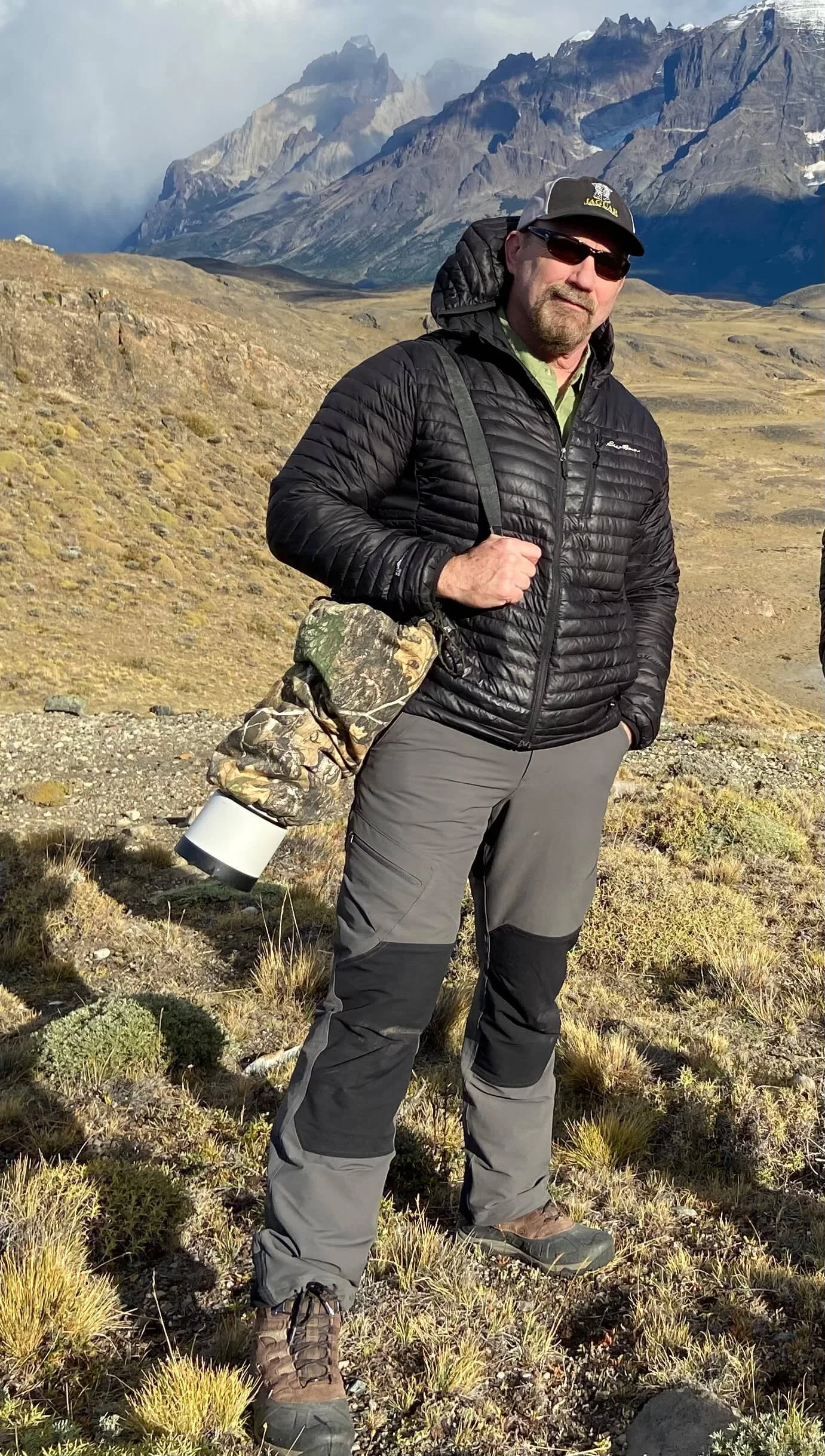
Paul Brooke in the field
Paul Brooke has five full-length collections of poetry including Light and Matter: Poems and Photographs of Iowa (2008) and Meditations on Egrets: Poems and Photographs of Sanibel Island (2010), Sirens and Seriemas: Photographs and Poems of the Amazon and Pantanal (2015), Arm Wrestling at the Iowa State Fair (2018) and The Skald and the Drukkin Tröllaukin: Photographs and Poems of Iceland (forthcoming 2022).
He was trained as an undergraduate as an ornithologist and later completed his Bachelors and Masters at Iowa State University and his Ph.D. in English at the University of Nebraska-Lincoln. Dr. Brooke is a Professor of English at Grand View University in Des Moines, Iowa, where he teaches Advanced Creative Writing, Introduction to Creative Writing, Creative Photography, Major Authors, and Literary Theory. He is the current Poet Laureate of Iowa.